The first sovereign
The name goes back to 1489, when Henry VII struck a large gold coin worth twenty shillings showing the king enthroned in majesty. That coin was a statement of Tudor power more than an everyday currency, and it was produced on and off through the following century.
The modern sovereign, from 1817
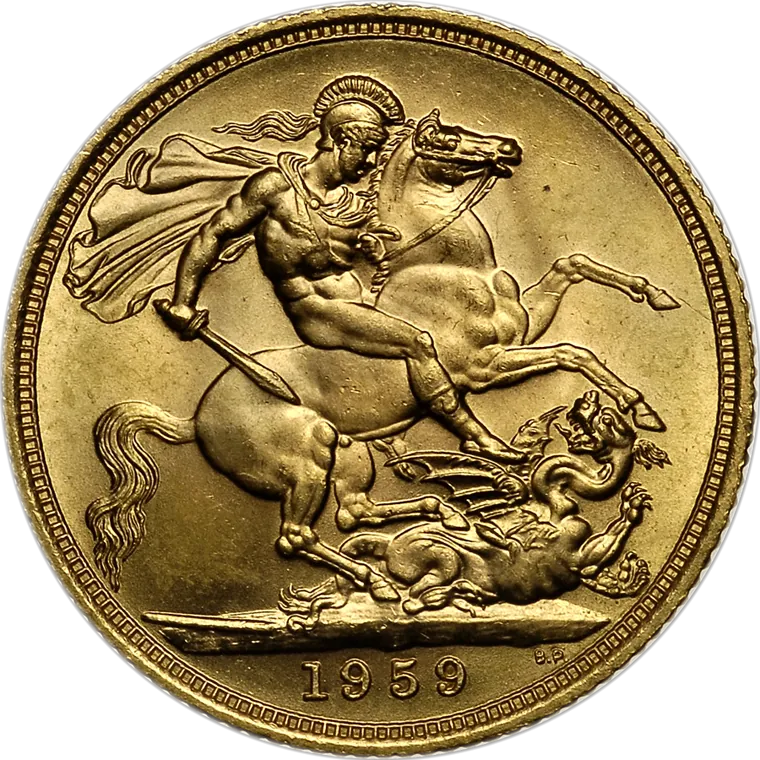
The sovereign we know today was introduced in 1817, after the Great Recoinage that followed the Napoleonic Wars, with a value of one pound. Its reverse carried Benedetto Pistrucci’s design of St George slaying the dragon, and that design has appeared on the coin for most of the two centuries since.
Through the nineteenth century the sovereign became one of the most trusted coins in the world, used for trade far beyond Britain.
The branch mints
As demand grew across the Empire, sovereigns were struck not only in London but at branch mints including Sydney, Melbourne, Perth, Ottawa, Pretoria and Bombay. Many of these coins carry a small mint mark, and they are a large part of what makes older sovereigns so absorbing to collect.
From circulation to bullion
Gold sovereigns disappeared from everyday British circulation after the First World War. Production for bullion resumed in 1957, and the sovereign has been struck regularly by the Royal Mint since, both as a bullion coin and as a proof for collectors.
Specification
| Coin | Fine gold | Diameter | Face value |
|---|---|---|---|
| Quarter Sovereign | 1.8306 g | 13.50 mm | 25p |
| Half Sovereign | 3.6612 g | 19.30 mm | 50p |
| Sovereign | 7.3224 g | 22.05 mm | £1 |
| Double Sovereign | 14.6447 g | 28.40 mm | £2 |
| Five Pound | 36.6117 g | 36.02 mm | £5 |
Every size is 22 carat, 916.7 fine, with the balance mostly copper. The quarter sovereign was added in 2009.
Why 22 carat is not a weakness
Pure gold is soft. The copper in a sovereign makes it far more resistant to scratches and wear, which is exactly why sovereigns survived a century of pockets and purses. The coin still contains its full stated weight of fine gold; the alloy is added on top.
Tax status
- Sovereigns are UK legal tender, so they are exempt from Capital Gains Tax for UK residents.
- As investment gold, they carry no VAT.
Who the sovereign suits
- Buyers who want to sell in small pieces rather than all at once.
- People who value history and a coin every dealer recognises.
- Anyone buying a gift.
- Collectors, for whom dates, monarchs and branch mints open up a lifetime of hunting.
If you want the most gold per pound, compare it with the Britannia in Britannia vs Sovereign.
Questions people ask
How much gold is in a sovereign?
7.3224 grams of fine gold, which is 0.2354 of a troy ounce.
Is a sovereign pure gold?
No, it is 22 carat, 916.7 fine. The copper makes it more durable.
Are sovereigns Capital Gains Tax free?
Yes, for UK residents, because they are UK legal tender.
What does the mint mark on an old sovereign mean?
It shows which branch mint struck the coin, such as S for Sydney or M for Melbourne.
Are older sovereigns worth more?
Some are, depending on date, mint, rarity and condition. Many common dates trade close to gold value.
This guide is general information, not financial, investment or tax advice. The value of precious metals can go down as well as up.